
Tariff-Proof Your Supply Chain: Is Your Business Ready for the Next Trade Shock?
For many businesses, this isn’t just a headline — it’s a deadline !
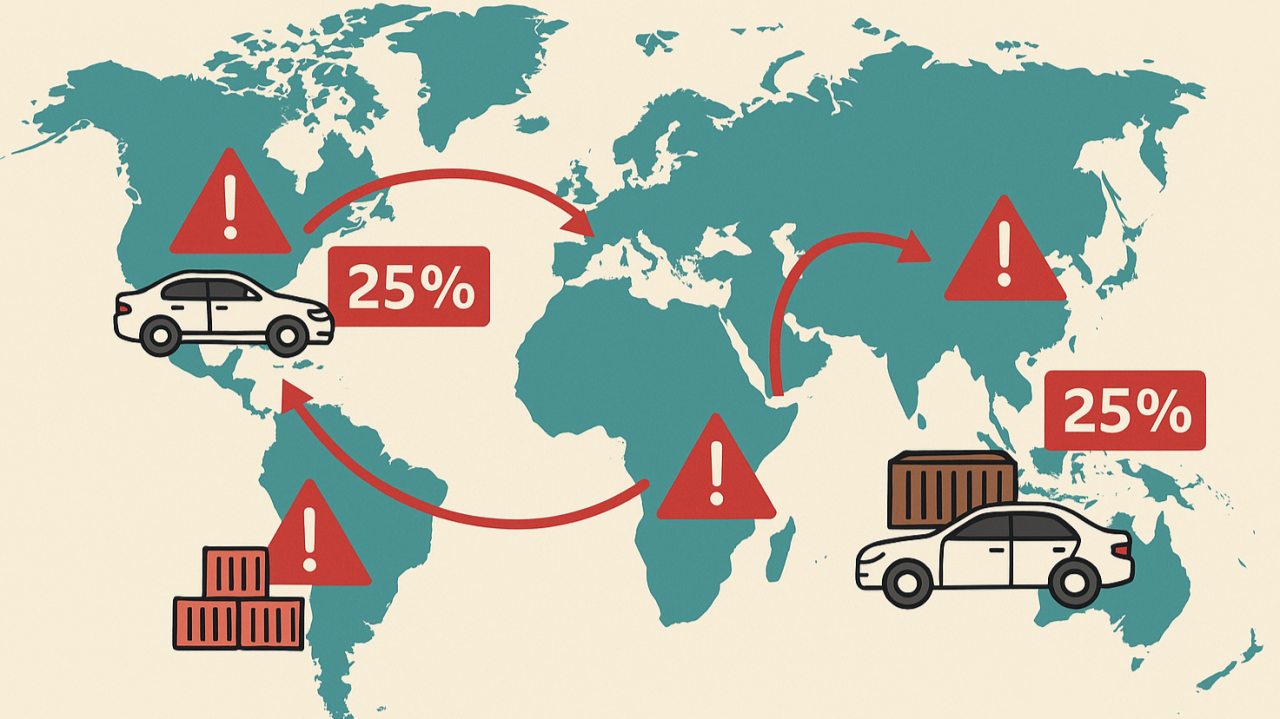
On March 26, a new 25% tariff on imported cars and car parts into the U.S. was announced — set to take effect April 2.
While positioned as a move to strengthen U.S. manufacturing, this policy could trigger a chain reaction of increased costs, supply disruptions, and diplomatic tensions.
For supply chain, sourcing, and manufacturing leaders, this is not just a policy update.
It’s a call to action.
Who Will Feel the Impact First?
- Automakers – Facing cost hikes and operational slowdowns
- Suppliers – Especially cross-border vendors, dealing with tighter margins
- Consumers – Prices projected to rise by $4,000–$10,000 per vehicle
- Exporters – From Mexico, Japan, South Korea, Canada, Germany — all at risk of reduced demand or retaliation
A U.S. International Trade Commission study estimated a 75% drop in car imports and a 5% rise in U.S. vehicle prices with a 25% tariff.
A Pattern We’ve Seen Before
Trade shocks are nothing new. But history shows those who prepare early tend to recover fastest:
2018 Steel & Aluminium Tariffs
- Harley-Davidson shifted production abroad
- GM & Ford warned of U.S. job losses
- The EU and China retaliated with their own tariffs
- Tesla accelerated its Shanghai plant to bypass future disruptions
U.S.–China Trade War
- Apple, GoPro, and others relocated assembly to Vietnam and India
- U.S. soybean and pork exporters lost billions
- Electronics and consumer goods companies restructured their global sourcing
The outcome? Tariffs start as policy, but end as operational chaos — unless businesses act fast.
10 Steps to Tariff-Proof Your Supply Chain
To avoid scrambling at the last minute, here’s how smart businesses are building resilience:
1.Map Critical Imports –Know where each component comes from
2. Scenario Plan – –Model 5%, 15%, and 25% tariff impacts
3.Diversify Suppliers – Build multi-region sourcing redundancy
4.Nearshore Where Possible – Minimize cross-border friction
5.Strategic Inventory – Pre-position stock for lead time risks
6. Negotiate Flex Clauses – Build tariff shock buffers into contracts
7.Track Trade Policy Trends – Don’t get caught flat-footed
8. Digitize Visibility –Real-time alerts on lead times, tariffs, and logistics
9. Redesign Smart – Simplify products or switch to domestic substitutes
10.Align Internally – Keep sourcing, legal, finance & ops on the same page
Final Thought
The next trade disruption is not a question of if, but when. Tariff-proofing isn’t a buzzword — it’s operational insurance.
The most competitive companies in 2025 won’t just be lean — they’ll be prepared.
Tariff-proofing your supply chain isn’t overreaction. It’s risk management, cost control, and strategic foresight rolled into one.